Featured
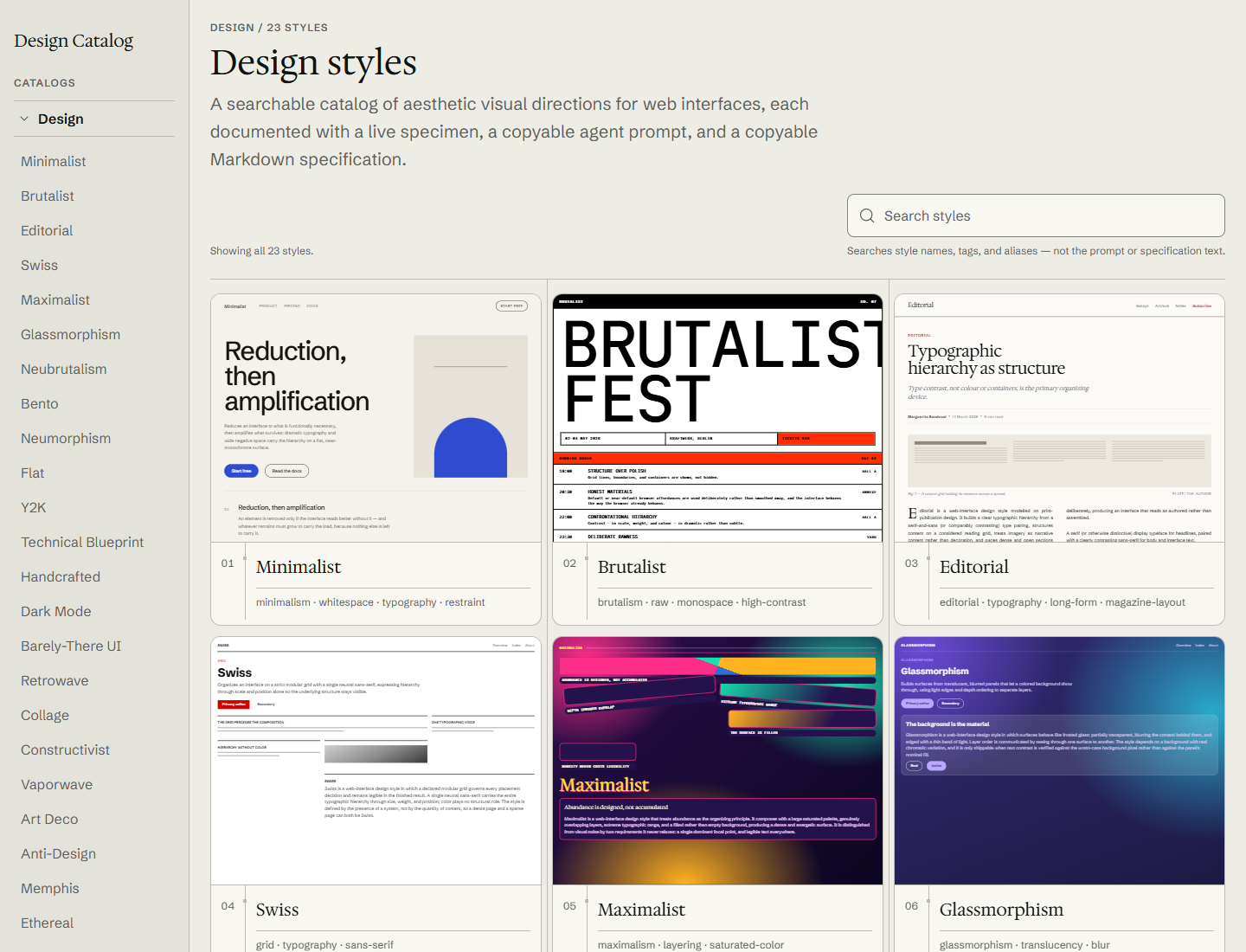
A visual catalog for exploring design styles, seeing them applied in interactive specimens, and copying prompts or specifications as an adaptable starting point instead of beginning each direction from scratch.
Without company experience, projects are the résumé. Here is what I built, which technologies I used, and the decisions I made along the way.
10 projects · 4 featured
A visual catalog for exploring design styles, seeing them applied in interactive specimens, and copying prompts or specifications as an adaptable starting point instead of beginning each direction from scratch.
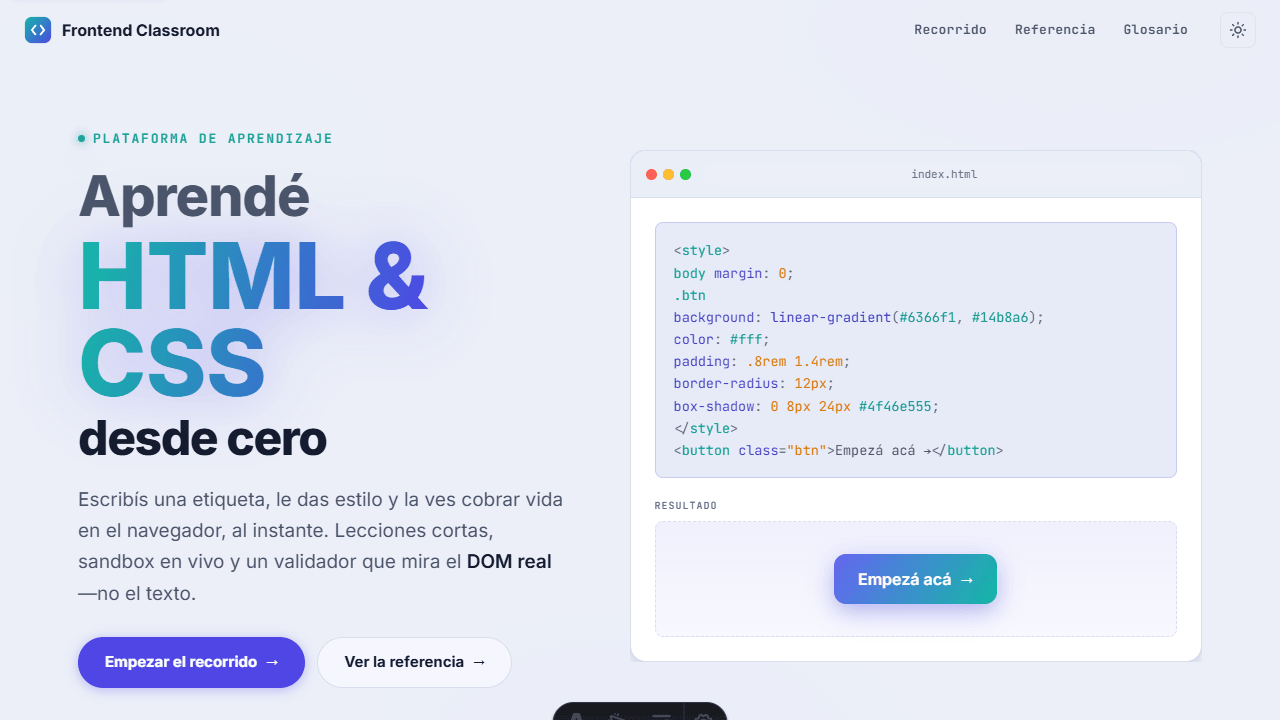
A web platform for learning HTML and CSS from scratch, built on two pillars: a 29-module guided Track with an executable sandbox and a searchable Reference with 134 entries. Underneath is a custom check engine that validates the actual DOM written by the student, not the text. A finished product with testing, CI, and a live deployment.
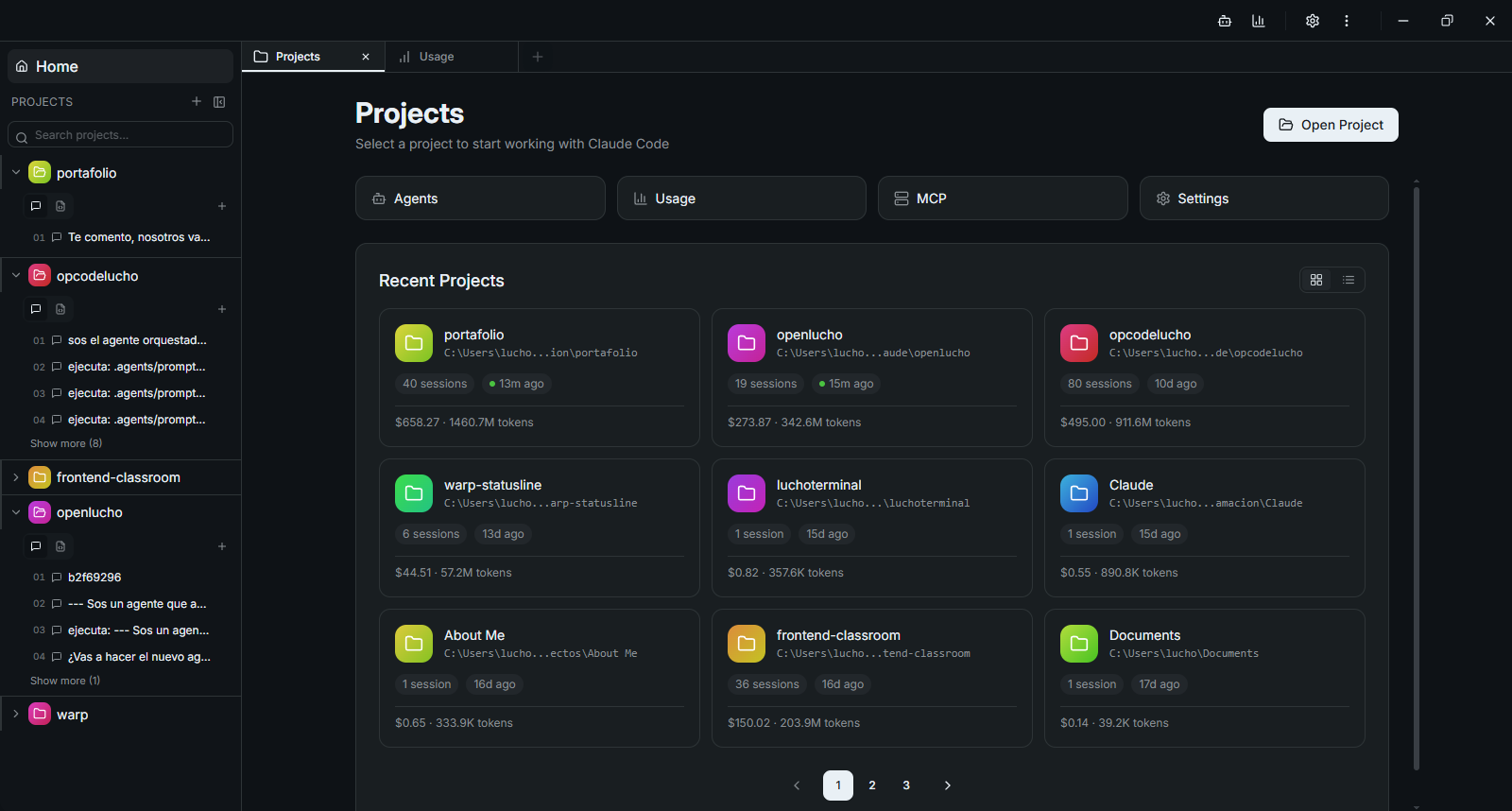
A desktop app (Tauri + Rust + React) for managing Claude Code projects and sessions, with a token-usage dashboard. It is a fork of winfunc/opcode (AGPL-3.0) that I moved into my own workspace: rebuilt navigation, a rewritten usage dashboard, and inherited CI made green—250 commits of features and adaptation.
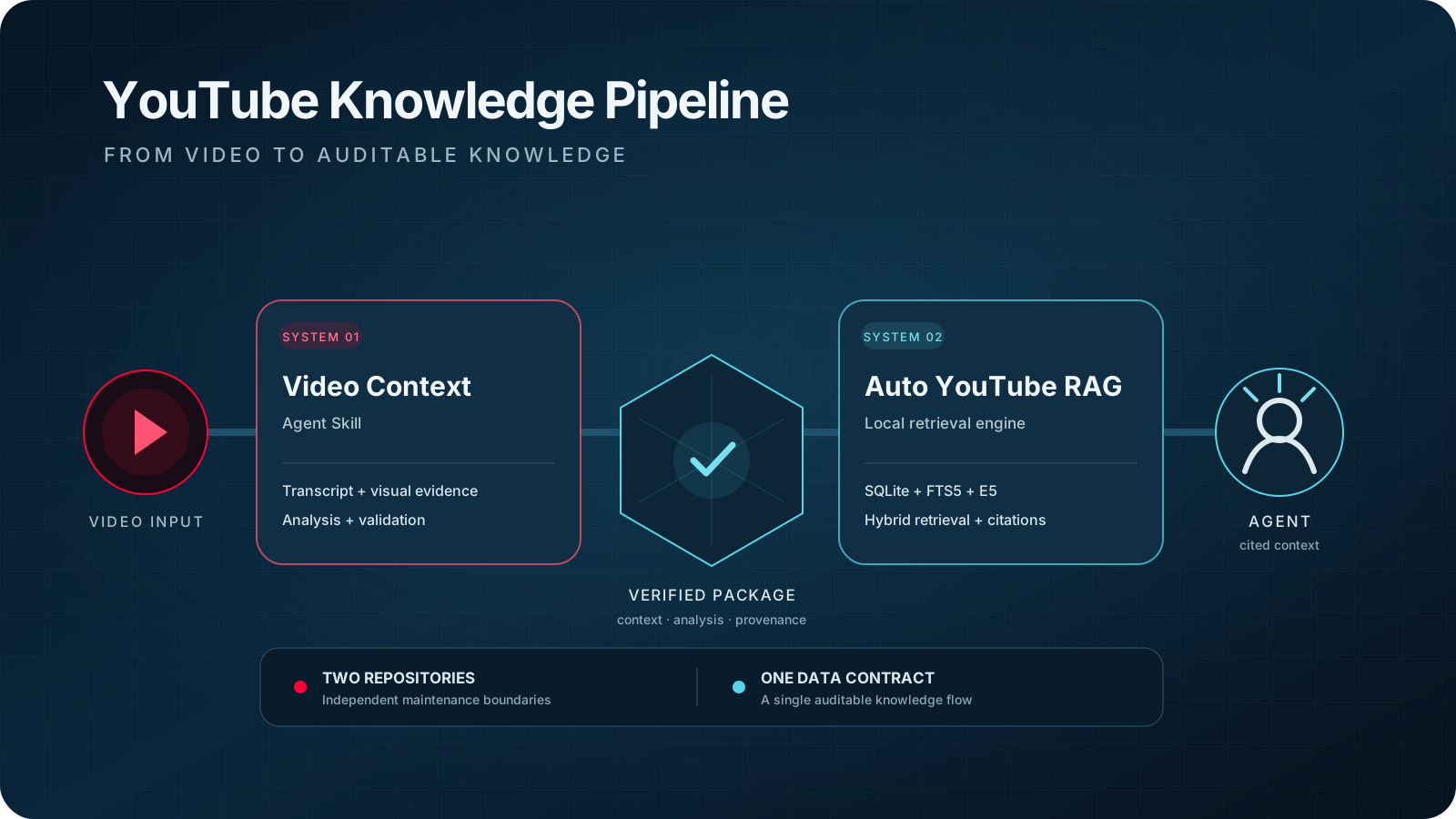
A local pipeline that turns YouTube videos into verifiable knowledge packages and indexes them to deliver broad, deduplicated and cited context to agents. Two repositories—an Agent Skill and a RAG system with no internal LLM—joined by an explicit evidence and provenance contract.
An AI-first bootstrapping system: guided by questions, the /kits-init skill creates a complete .agents/ directory—workspace.json, agents, skills, and workflows—in any project. It composes a catalog of seven packs and 50 skills written entirely in Markdown, with no runtime of its own: the AI agent is the runtime. It works the same in Claude Code, OpenCode, or plain chat.
A platform for organizing and observing hierarchical agent systems: it models Project → Agent → Thread → Event and provides complete traceability because events are immutable. Three surfaces on the same backend — a web UI with the live org chart, a CLI (evam), and a REST + WebSocket API. Archived TypeScript monorepo.
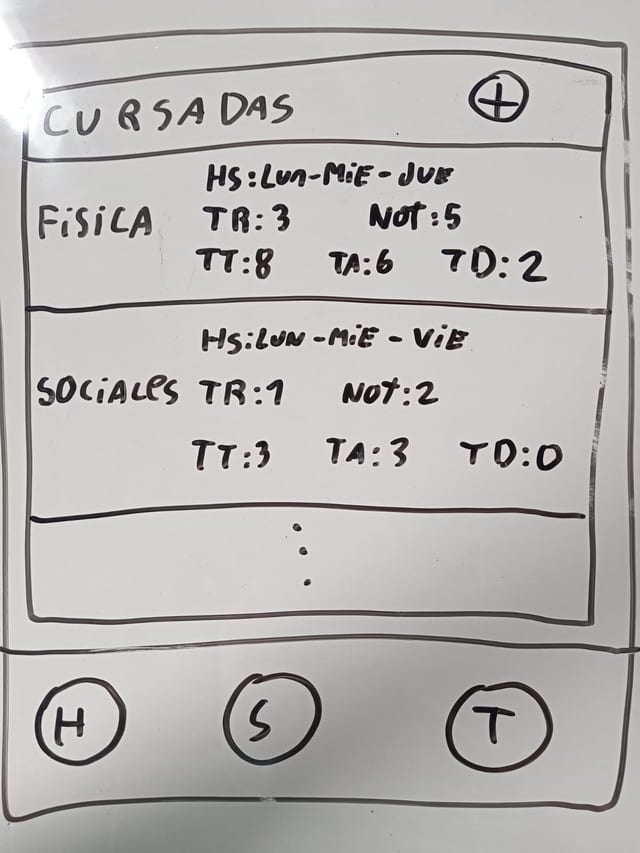
A mobile app (Expo + React Native + TypeScript) for organizing coursework: subjects with schedules and grades, assignments with status, and loose notes, across Today, Day, Week, and Calendar views. It was my first app designed solely for mobile, built in 8 days with DDD architecture and in-memory data—and it planted the idea I later developed in my-school-app.
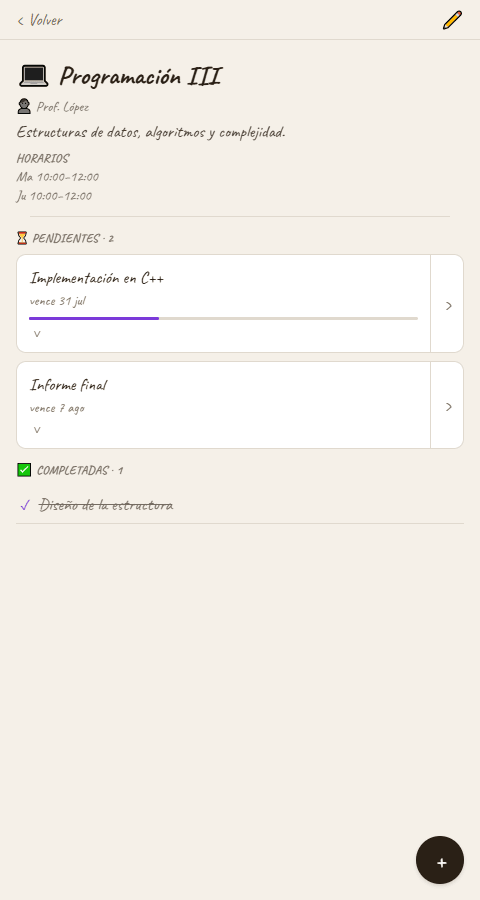
A mobile app (Expo + React Native) for organizing coursework: subjects, activities, and tasks in a three-level hierarchy, plus a due-date calendar. It works entirely locally, with no backend or accounts. It was fully designed before it was programmed: 26 HTML wireframes committed first, followed by 11 numbered phases that implemented them one by one.
A persistence and continuity layer over Claude Code: it observes sessions Claude already writes to disk, persists them in SQLite, and builds living Markdown memory where every fact cites the real events it came from. It began as something else—an orchestrator meant to make subagents cheaper—until its own spike measured routing at 3.3× the cost and the product changed direction. Archived.
A full-stack mobile-phone e-commerce application: filtered catalog, three-step checkout, order history, and admin panel. The backend (Fastify 5 + PostgreSQL/Prisma) uses feature-based Clean Architecture and three original ADRs; the frontend is Next.js 16. Built in 6 days with my own multi-agent workflow, 41 commits, all mine.
No projects use all those technologies at once. Try removing a filter.
Every card opens a technical case study: architecture, decisions, and the reasoning behind each one. If anything remains unclear, let’s talk.
or directly → LuchoC.dev@gmail.com